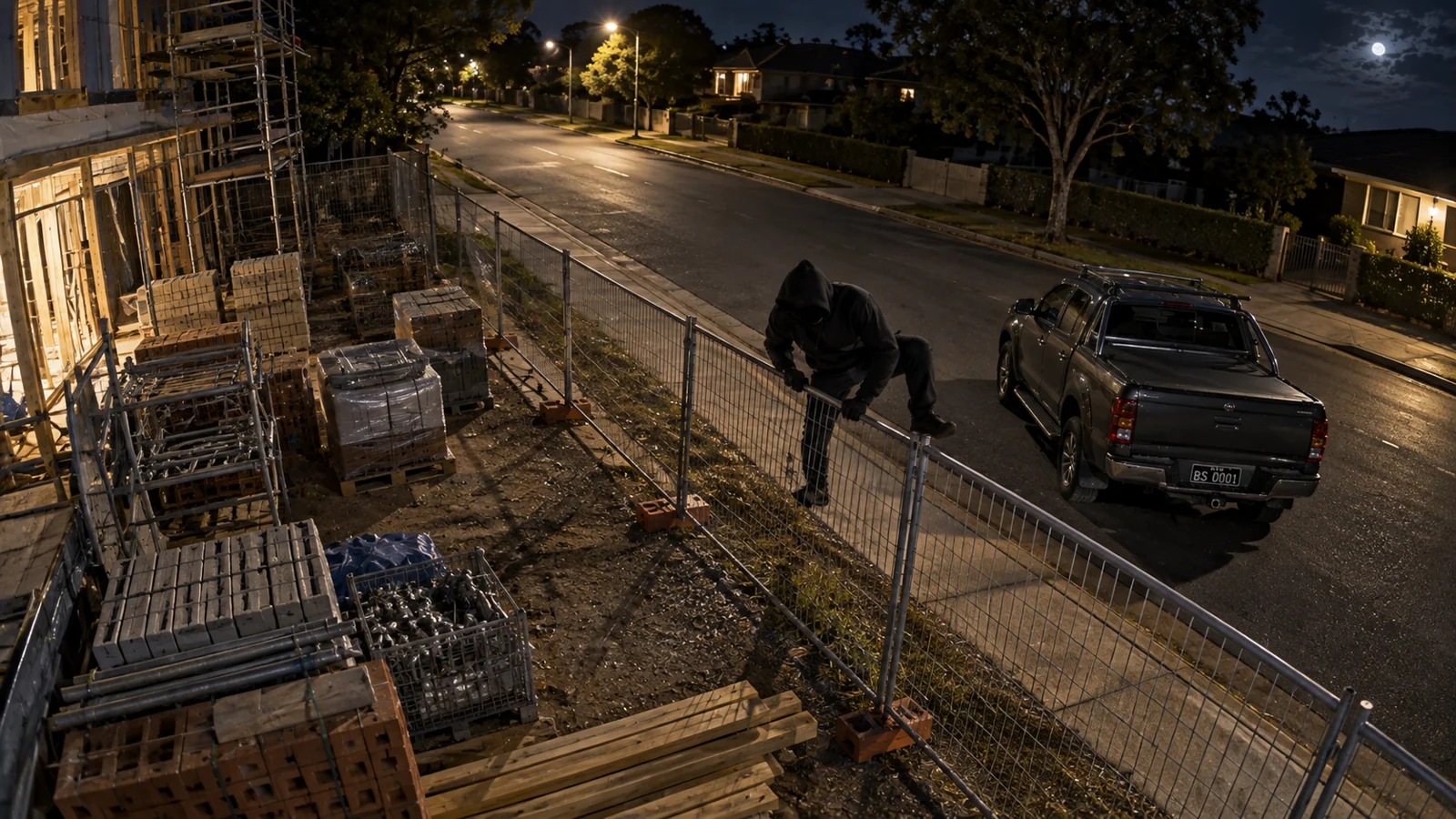
How to Reduce Tool and Equipment Theft on Construction Sites
Tools move constantly between vehicles, work areas and storage on Sydney building sites. That movement creates opportunities for items to be misplaced, borrowed without a clear record or stolen. Reducing exposure means making everyday handling more deliberate. For builders, the useful starting point is a practical routine covering responsibility, storage, deliveries and access, with any camera hire considered as a supporting measure rather than a guarantee against theft.

Identify where tools become exposed
Walk the site with the supervisor and follow the path a tool takes through a normal working day. Look at unloading areas, temporary workstations, shared benches and the route back to storage. A secure container does little for equipment left beside an open gate while trades move between tasks.
Separate site-owned equipment from subcontractor property in your planning. Agree who manages shared items, who authorises their removal and where personal tools may be stored. Make these arrangements clear during site induction rather than relying on informal understandings between crews.
Repeat the walk-through as work areas change. A storage location that suited excavation may become exposed once access routes shift.
Make secure storage part of the work sequence
Choose storage that suits the equipment, the available space and the practical need to retrieve tools during work. Review the condition of locks, doors and surrounding fencing, and avoid leaving valuable items visible from public access points.
Give packing away a place in the day's work allocation. If everyone assumes somebody else will secure shared tools, items can remain outside after the last trade leaves. Nominate responsibility for checking storage and recording unresolved problems.
The NSW Police construction site crime prevention brochure recommends measures including fencing, secure storage, delivery timing, identifying possessions and key controls. Use these principles to review your site's arrangements, not as a promise that theft cannot occur.
Coordinate deliveries with available storage
Before ordering equipment or accepting a hired item, confirm where it will go and who will receive it. Avoid letting valuable deliveries arrive before secure storage is available simply because the supplier has an opening in its schedule.
Tell suppliers which access point to use and who can approve a delivery location. If the nominated receiver is unavailable, have a clear alternative rather than allowing equipment to be left unattended near the street.
Include collections in the same process. Confirm the identity of the collecting party through the agreed contact arrangement, record what leaves and update the equipment register. For broader controls beyond individual assets, see reducing construction site theft risk in Sydney.
Control keys and equipment movements
Keep an up-to-date record of who holds storage keys and who may authorise access. Review access when subcontractors finish their work, staffing changes or a key goes missing. Avoid informal key sharing that leaves the supervisor unable to establish who opened a storage area.
For equipment moving between projects, record the destination, responsible person and expected return. A simple shared register can help distinguish an authorised transfer from an unexplained absence.
Do not circulate storage details more widely than necessary. Discuss access arrangements with the people who need them, and make sure temporary workers know how to request equipment without bypassing the nominated process.
Keep records useful enough to act on
An equipment list should help someone identify a missing item, not merely show that the business owns tools. Record identifying details, ownership and relevant photographs where available. Keep records accessible to the person responsible for reporting a loss.
Agree how missing equipment is escalated. Start by checking authorised movements and shared storage, then document what is known without guessing who may be responsible. Preserve relevant information and report suspected theft through appropriate channels.
If someone is seen entering without permission, keep workers away from the situation and seek appropriate assistance. Do not confront suspected intruders or attempt to recover equipment yourself.
Assess camera hire against specific needs
Camera hire is easier to assess when the builder can describe the problem: an exposed storage entrance, an unattended unloading area or changing access routes. Discuss those locations through Barrier Solutions Construction Site Camera Hire, rather than assuming a camera will address every vulnerability.
Use this checklist before agreeing the scope:
- Identify the storage and access areas you want reviewed.
- Ask whether recording and remote viewing are included.
- Ask what alerts, low-light capability, SIM arrangements and app access are available.
- Confirm battery arrangements and any site responsibilities for equipment care.
- Ask whether any staffed response is offered and who handles notifications.
- Agree setup, relocation, removal and responsibility for reported faults.
Barrier Solutions coordinates setup, equipment care and removal under the agreed scope. For related planning, read practical considerations for remote construction site monitoring.
Questions Sydney builders often ask
Can camera hire replace secure tool storage?
No. Keep storage, access controls and equipment records in place. Discuss what the proposed camera arrangement can actually provide; recording, alerts and other functions should be confirmed rather than assumed.
Who should manage subcontractors' tools?
Agree responsibilities before tools arrive. The builder should explain available storage and site access arrangements, while each subcontractor should understand the agreed process for securing and removing their own equipment.
What should happen after an unexplained loss?
Check the movement register and speak with authorised users. Document the missing item and relevant circumstances, preserve available information and report suspected theft appropriately. Review the process without making unsupported accusations.
Build a routine that survives busy days
Effective tool security depends on arrangements people can follow during a demanding build. Match deliveries to storage, allocate closing responsibilities and keep equipment movements visible to the supervisor. Revisit these controls whenever the layout or trade mix changes.
If camera hire may support those arrangements, give Barrier Solutions a clear description of the Sydney site, its storage areas and the access concerns you want assessed. Confirm the equipment functions and service scope before making them part of your security plan.