Construction Site Security at Night: What Sydney Builders Should Consider
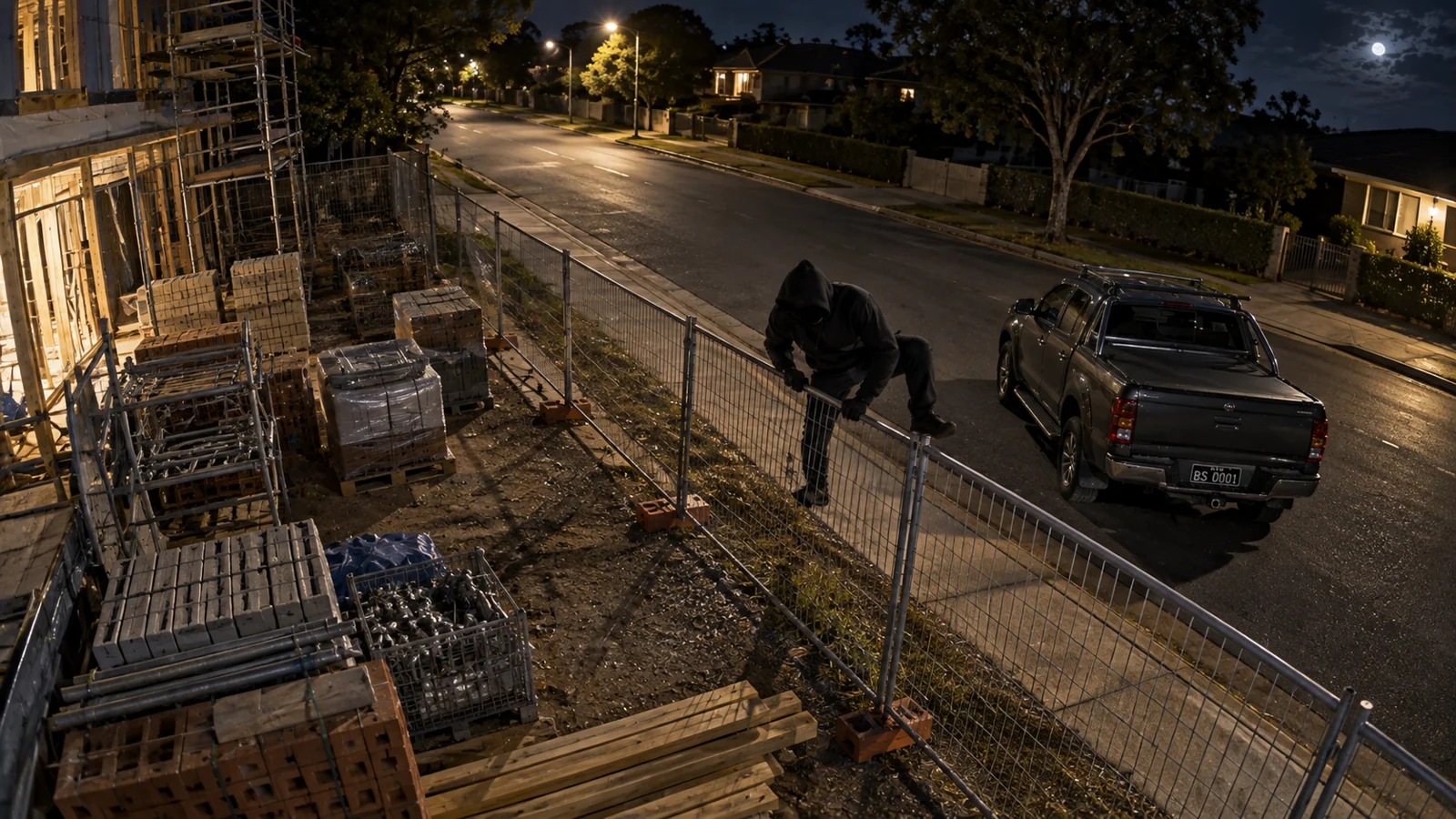
The end of the working day changes how a Sydney construction site is used and supervised. Deliveries may still be expected, temporary access points may remain open and valuable equipment may be waiting for the next trade. A practical night-time security plan starts before workers leave. It should combine a clear close-down routine with agreed camera arrangements where appropriate, without assuming that technology will prevent theft.
Treat close-down as a site handover
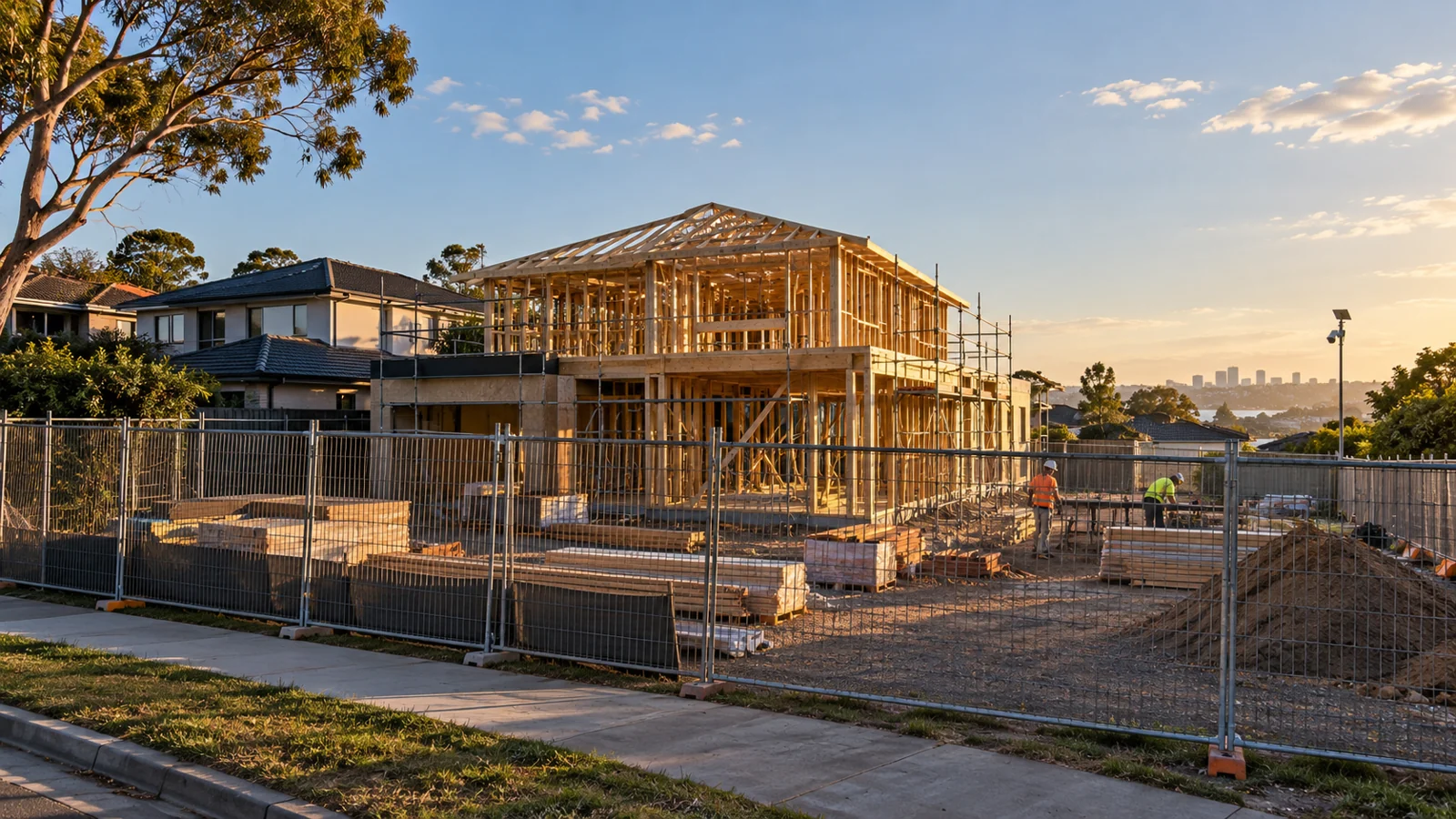
Assign responsibility for the final security check rather than leaving it to whoever happens to depart last. The nominated person needs to know which trades are still working, whether any authorised visitors are expected and which areas should be closed.
Make the handover specific to the current stage of the build. A site with active excavation has different access and storage issues from a house approaching fit-out. Review the routine when temporary fencing moves, neighbouring works affect access or trades begin using another entry.
For the wider planning context, read how Sydney builders can reduce construction site theft risk.
Check boundaries, gates and authorised access
Walk the practical access routes before leaving. Check whether gates are secured as intended, temporary openings have been addressed and stored materials are not interfering with closure. Report damaged fencing rather than assuming the next crew will notice it.
The NSW Police guidance on construction site security recommends fencing and key or access controls as part of site protection. Apply those principles through a project-specific access plan.
Keep track of who holds keys or other access credentials. Where after-hours access is necessary, identify the authorised person and purpose beforehand. Avoid informal arrangements that leave the supervisor unsure who may be on site after the main crew departs.
Put storage and deliveries into the night plan
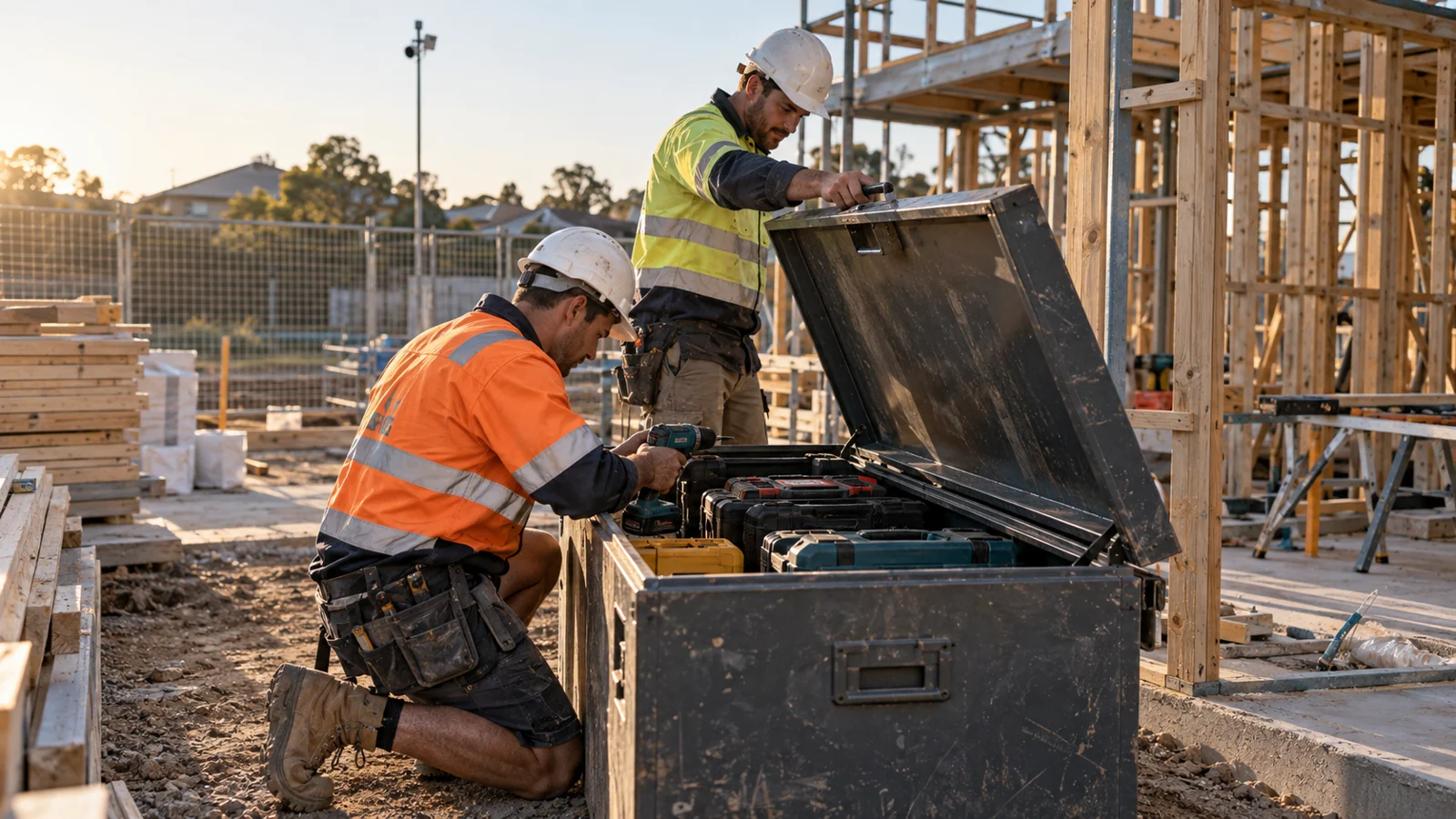
Review what will remain on site overnight and where it will be kept. Secure storage should be an intentional part of the close-down routine, not an option used only when workers have spare time. Check that subcontractors understand the storage arrangements for their equipment.
Discuss delivery timing with suppliers so materials do not arrive after the receiving team has left unless a specific arrangement has been made. Identify who accepts the delivery and where it should go.
Keep an organised record identifying valuable possessions, with available photographs or identifying details. This is useful preparation for reporting a loss; it is not a substitute for storage and access controls.
Assess darkness without assuming camera capability
Visit the proposed camera locations with the provider and discuss how conditions change after workers leave. Street lighting, neighbouring lights, shadows and obstructions may affect the planned view. Ask whether a demonstration or suitability check can be arranged for the actual location.
Is low-light operation available in the proposed equipment, and what limitations apply? Would additional site lighting be useful, and who would arrange it? Do not assume that a daytime view represents what will be available at night.
If temporary lighting is proposed, have its placement assessed by the appropriate project personnel. Consider access routes and neighbouring properties without treating this article as an electrical design or compliance assessment.
Confirm the camera hire scope before relying on it
Ask whether recording is included and how any footage can be accessed. Are alerts available, what activates them and who would receive them? Is app access provided, and how are authorised users managed? Is any staffed response included, or must the builder arrange all follow-up?
For solar equipment, is a SIM included and who manages connectivity? What battery arrangements apply, and what equipment care is expected from the site team? Ask how interruptions, damage or faults should be reported.
Keep the answers with the project handover information. Our article on planning remote construction site monitoring responsibilities explains how to connect confirmed functions with nominated contacts.
Use a repeatable end-of-day checklist
A short checklist helps the supervisor recognise unfinished tasks before leaving. Adjust it to the site rather than treating it as a universal security assessment.
- Attendance: establish who remains on site and whether later access is authorised.
- Boundary: check gates, temporary openings and visible damage.
- Storage: confirm that tools, equipment and materials are in their agreed locations.
- Deliveries: resolve outstanding arrivals and receiving arrangements.
- Camera area: check for new obstructions and report concerns through the agreed process.
- Contacts: ensure the nominated contact has current escalation information.
- Handover: record unresolved issues for the next supervisor or crew.
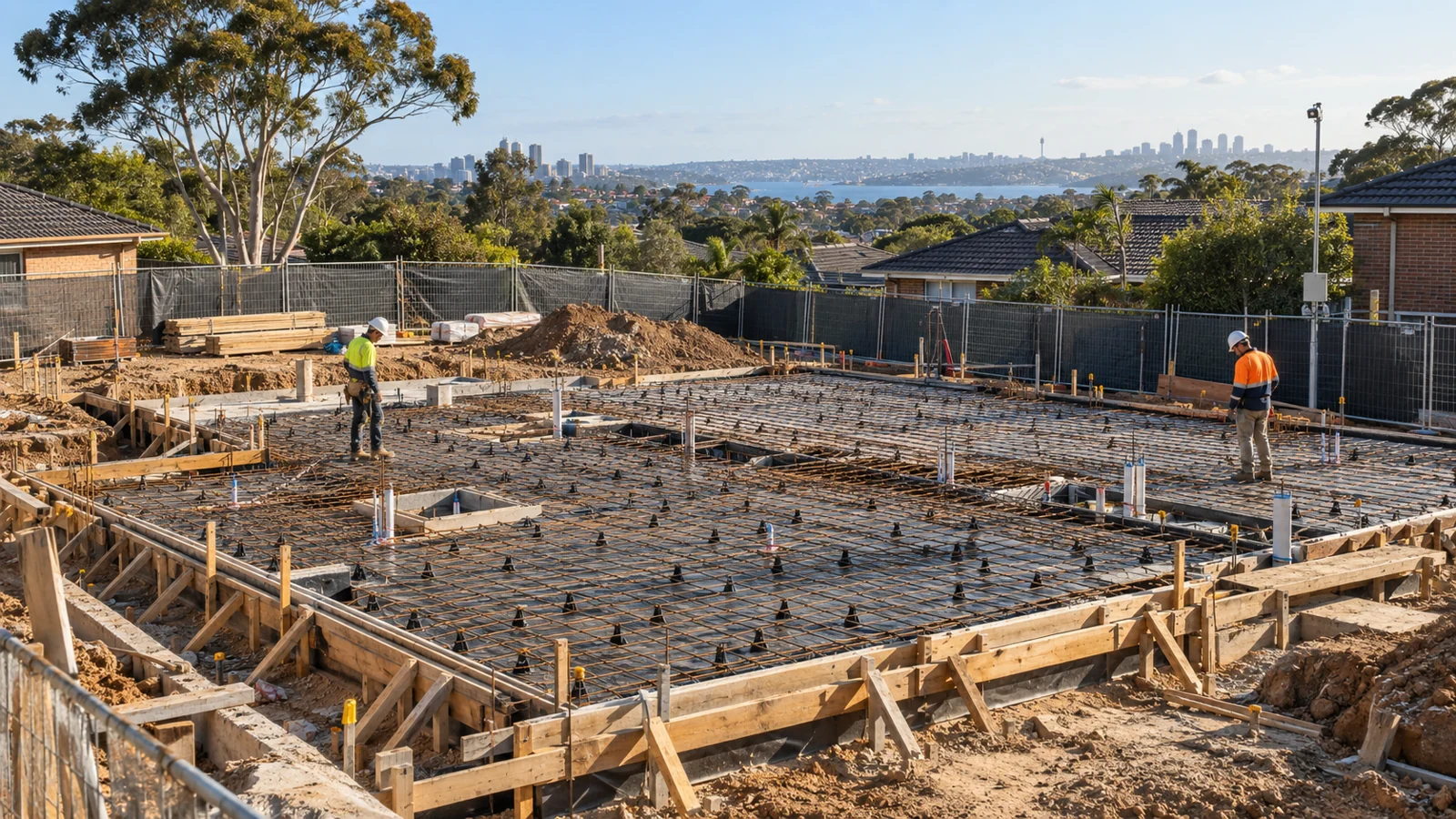
For early project stages, connect this routine with security and protection planning from the slab stage.
Questions about after-hours site incidents
Should a supervisor attend if suspicious activity is reported?
Do not send someone to confront suspected intruders. Follow the agreed escalation process and contact police as appropriate. Any later attendance should be organised with safety in mind, not driven by an attempt to recover property immediately.
What if a gate is found open remotely?
Where viewing is available, an image may not explain why the gate is open. Check the authorised access arrangements and notify the responsible contact. Do not assume that the image proves either an intrusion or a harmless event.
What happens if the camera arrangement is unavailable?
Follow the agreed fault-reporting procedure and advise the builder-side contact. Maintain the physical security routine regardless. Confirm beforehand who coordinates equipment care and what the builder should do while the reported issue is being assessed.
Build a night routine your team can follow
Night-time security works as a coordinated routine: close the site deliberately, organise storage, control access and establish a safe response path. Cameras may support that routine, but their functions and service responsibilities need confirmation.
Barrier Solutions coordinates installation, setup, equipment care and removal under the agreed scope. Discuss Construction Site Camera Hire for Sydney building sites before finalising your after-hours plan, with the current layout and nominated contacts ready for review.